How to Choose Motorcycle Navigation
At MyEnduro, we test navigation devices very intensively, not only for our own use, but also to be able to advise customers on their choice. After years of experience, we are able to provide a detailed comparison of all available solutions. At the moment, I would divide them into the following basic categories:
- A regular phone for taking photos, making calls, communication and navigation
- A dedicated phone for navigation
- A tablet for navigation
- Phone mirroring
- Navigation designed for motorcycles
- Paper maps, route planning on a phone and riding according to road signs
I would divide the decision on which solution to choose into two factors: the user’s requirements and the purchase price.
1. Regular phone in a mount
For an undemanding traveller who only needs to enter a destination, calculate the fastest or most winding route and then follow it, I would recommend using a regular phone placed in a mount. This is a relatively inexpensive solution – all you need to do is buy a phone mount, connect the phone to a power supply and set off.
Disadvantages:
- You have to take the phone out when you want to take photos, write or search the internet.
- The phone takes a beating on a motorcycle.
- Power supply problems often occur.
- Operating the phone while riding is not entirely easy. With gloves on, it is often almost impossible.
- Visibility in sunlight is often poorer.
- Apps have small buttons and complicated function menus.
2. Phone mirroring
When you navigate frequently, it is usually more practical to buy a phone mirroring solution, which eliminates the phone being subjected to vibrations, weather conditions, etc. The display is easier to read than on many phones.
Disadvantages:
- Handling while riding remains more difficult.
- The phone still needs to be powered, and it drains very quickly while mirroring.
3. Dedicated rugged phone
Another option is to use a dedicated rugged phone with a high-quality display. This eliminates damage to your main phone caused by vibrations, as well as constantly taking the phone out for taking photos or communicating. There is the option of connecting a remote control for frequent actions, especially zooming the map.
Disadvantages:
- Handling is more difficult because the apps are designed mainly for use without gloves and while stationary, but the remote control solves a lot of this.
- Power supply – phones require a USB socket and cable, which are potential weak points.
- Wireless charging also often malfunctions and heats up the phone.
4. Motorcycle navigation
Motorcycle navigation is a solution for more demanding users who navigate frequently. It eliminates problems with wear and damage to the phone, as well as power supply issues. Modern devices have a high-quality, easily readable display, an interface designed for operation with gloves, large buttons and often simpler control of the app itself. Selected models offer the option of connecting a remote control. It is a robust and reliable solution.
Disadvantages:
- Maps are often rendered slowly.
- Setting options are limited.
- It is not possible to use your favourite phone apps.
5. Specialised tablets
Specialised tablets: There is no need to take out your phone, the power supply is robust 12 V, as with dedicated navigation devices, they have a large, high-quality display, the option of connecting a remote control and the ability to use your favourite phone apps.
Disadvantages:
- Apps are still not designed for operation with gloves, but the remote control and large display partially eliminate this disadvantage.
- The device is larger, and it can often be difficult to mount it in a suitable location.
Comparison of Motorcycle Navigation Solutions
| Solution |
Advantages |
Disadvantages |
| Regular phone in a mount |
- Relatively inexpensive solution
- All you need is a phone mount and a power supply
- The phone can also be used for taking photos, making calls and communication
- Easy destination entry and calculation of the fastest or most winding route
|
- You have to take the phone out to take photos, write or search the internet
- The phone takes a beating on a motorcycle
- Frequent power supply problems
- Operating it while riding is not easy; with gloves on, it is often almost impossible
- Visibility in sunlight is often poorer
- Small buttons and complicated function menus
|
| Phone mirroring |
- Eliminates the phone being subjected to vibrations and weather conditions
- The display is easier to read than on many phones
- More suitable for frequent navigation than a regular phone in a mount
|
- Handling while riding remains more difficult
- The phone must be powered continuously
- The phone drains very quickly while mirroring
|
| Dedicated rugged phone |
- Eliminates damage to the main phone caused by vibrations
- Eliminates constantly taking the phone out for taking photos and communication
- High-quality display
- Option of connecting a remote control for frequent actions, especially zooming the map
|
- Handling is more difficult because the apps are designed mainly for use without gloves and while stationary
- However, the remote control significantly solves this issue
- Phones require a USB socket and cable, which are potential weak points
- Wireless charging often malfunctions and heats up the phone
|
| Motorcycle navigation |
- A solution for more demanding users and frequent navigation
- Eliminates problems with wear and damage to the phone
- Eliminates power supply problems
- High-quality, easily readable display
- Interface designed for operation with gloves
- Large buttons and often simpler app control
- Selected models offer the option of connecting a remote control
- Robust and reliable solution
|
- Maps are often rendered slowly
- Setting options are limited
- It is not possible to use your favourite phone apps
|
| Specialised tablets |
- There is no need to take out your phone
- Robust 12 V power supply, as with dedicated navigation devices
- Large, high-quality display
- Option of connecting a remote control
- Ability to use your favourite phone apps
|
- Apps are still not designed for operation with gloves
- The remote control and large display partially eliminate this disadvantage
- The device is larger
- It can often be difficult to mount the tablet in a suitable location
|
DMD Tablets – Solutions Designed for Motorcycles
Below, we present an example of the last-mentioned option – tablets from the Portuguese brand DMD. During their development, the manufacturer aimed to create a high-quality and robust solution designed specifically for motorcycles.
Compared with a regular tablet, they offer a range of specific accessories and features.
| Area |
DMD tablet features |
| Durability and mounting |
- Resistance to vibrations and water
- Robust motorcycle mount
|
| Power supply |
- 12 V architecture
- High-quality, durable power connector
- Output option for powering other devices
|
| Display and controls |
- High-brightness LCD display for good readability in sunlight
- Robust, high-quality handlebar controller
- Custom tablet interface designed for operation with gloves and for the needs of a motorcycle rider
|
| Navigation |
- Custom navigation app
- Very high GPS sensitivity
- Option of connecting an external antenna
|
| Connectivity and communication |
- Custom connectivity: 2x SIM and 1x eSIM
- Expandable communication with BMW motorcycles
- Custom system for sharing your location with other riders
|
| Safety and automation |
- SOS system
- On/off system when the ignition is switched on and off
- Additional functions
|
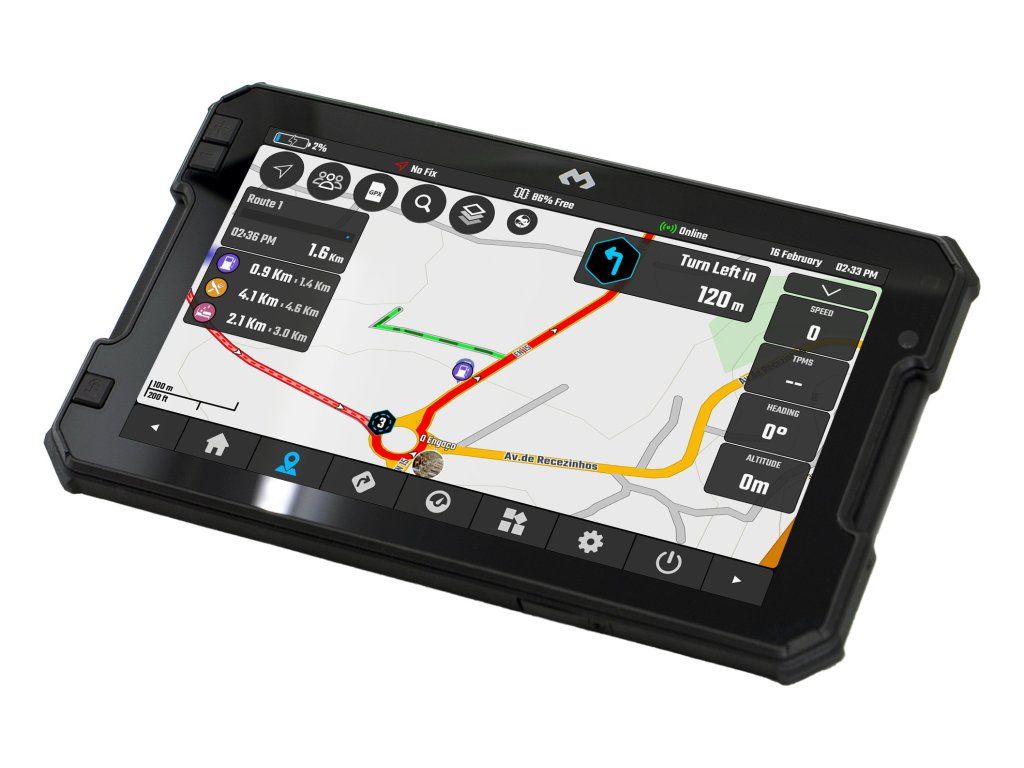
DMD NOR7E Nav Tab 7″ 18 cm is an ideal choice for riders who prefer a more compact size without compromising on performance. The device is designed to withstand external conditions, which is a fundamental requirement for long-distance travel in varied terrain. Thanks to its size, it is suitable for installation on motorcycle cockpits, where it does not take up unnecessary space or obstruct visibility, while providing sufficient space for a clear display of map data.
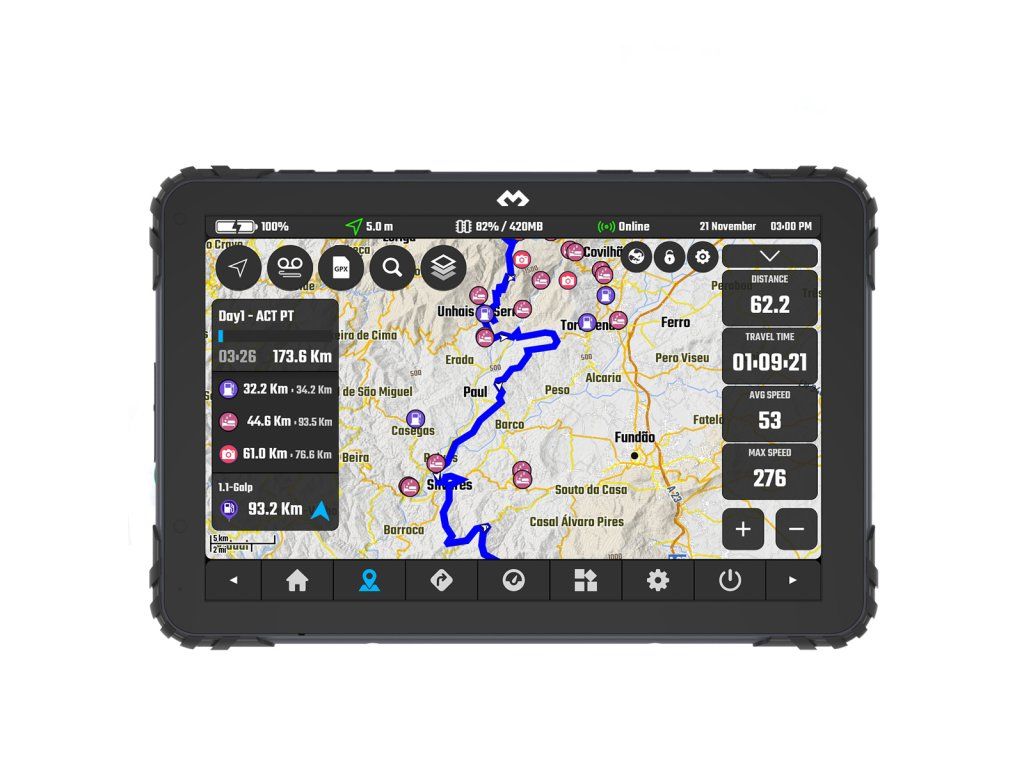
The oldest model, the DMD-T865X Nav Tab 8″ 20 cm with Off-Road Mount. This version is equipped with a mount designed to withstand the impacts and vibrations typical of off-road riding. The eight-inch display makes navigation much easier to read while riding, increasing both comfort and safety on long-distance journeys.
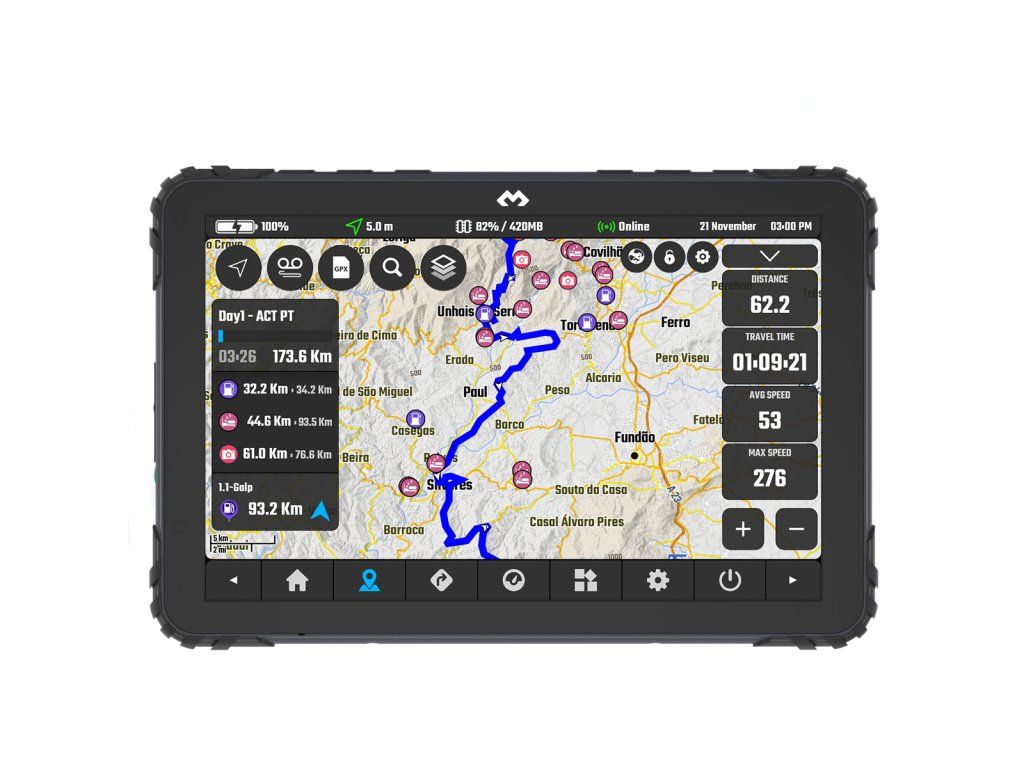
The evolutionary model, the DMD-T880X Nav Tab 8″ 20 cm with Motorcycle Mount, is configured for maximum stability on paved roads. For riders who spend most of their time off-road, there is the DMD-T880X Nav Tab 8″ 20 cm with Off-Road Mount version. These tablets are designed to meet the reliability requirements of modern adventure bikes. Compared with the older T865X model, it has a faster CPU, more RAM, an eSIM and higher GPS sensitivity.
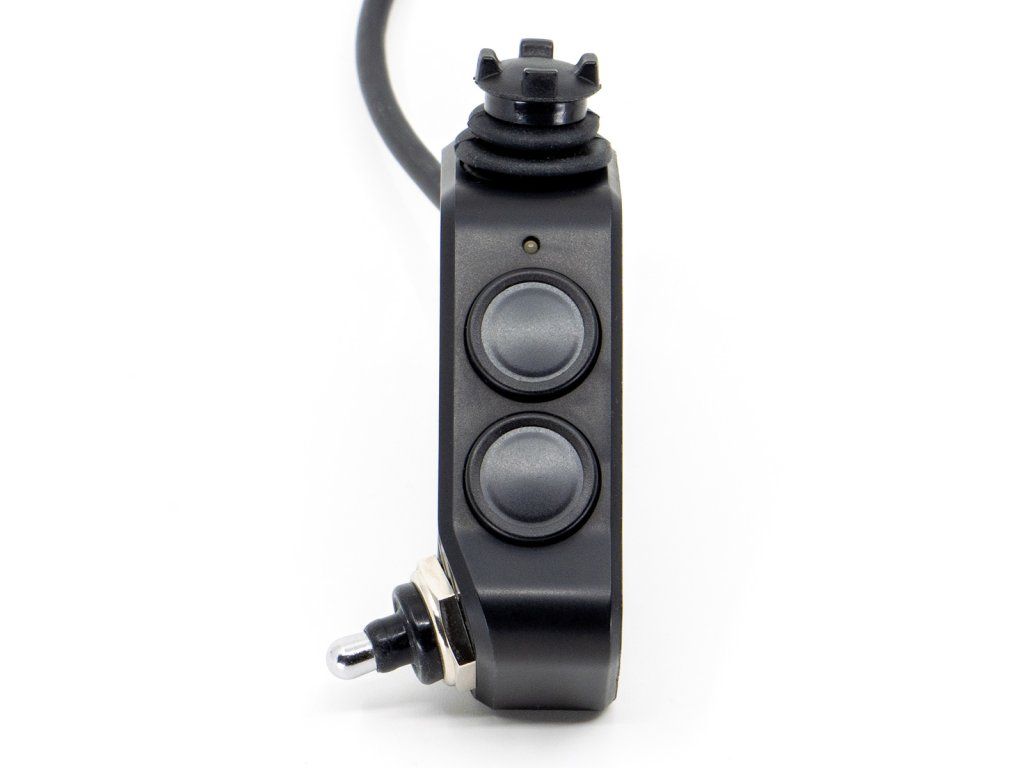
A key element for effective navigation control is the DMD REMOTE 2. This controller allows the rider to easily switch between functions, zoom the map or operate the navigation app without having to take a hand off the handlebars. In technically demanding sections or when riding off-road, this option is essential for maintaining focus on riding the motorcycle itself. The controller is fully compatible with the DMD system and forms an integrated unit with it, increasing user comfort.
